When Residents Become Planners: Jakarta's Participatory Housing Model and What Cities Everywhere Can Learn From It
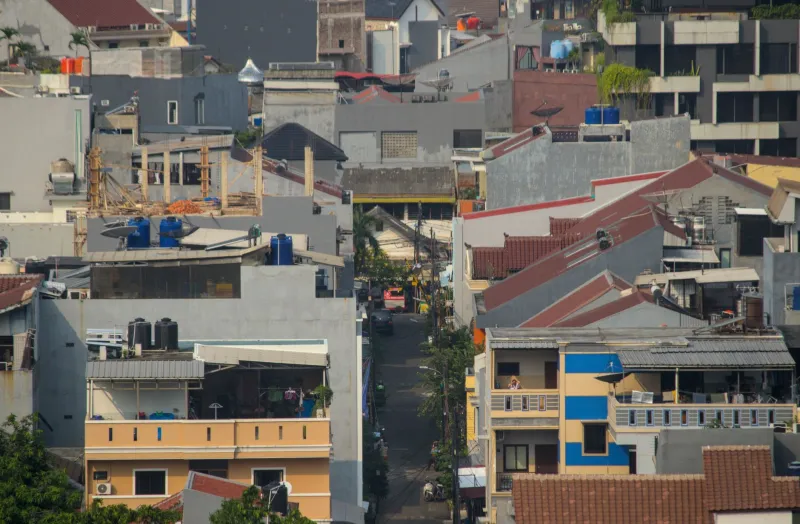
The conventional wisdom about urban housing policy holds that solutions come from above — from city hall, from developers, from zoning boards staffed by professionals with advanced degrees in planning and public administration. Jakarta, a megacity of more than ten million people wrestling with some of the most severe housing density pressures in Asia, is testing a different proposition: that the people who actually live in a neighborhood often know more about what it needs than anyone sitting in a government office.
This is not a romantic notion. It is, increasingly, a documented administrative practice.
The Problem That Demanded a New Approach
Jakarta's housing challenge is not easily summarized in a single statistic, but a few figures convey its dimensions. The city's population density in some central districts exceeds 40,000 people per square kilometer — more than double the density of Manhattan. Informal settlements, known locally as kampung, house an estimated 60 percent of Jakarta's population in conditions that range from modest to genuinely precarious. Meanwhile, the formal housing market has trended sharply toward luxury and upper-middle-income development, leaving an enormous affordability gap for working-class families.
Traditional government-led urban renewal programs have a mixed record in this context. Several large-scale resettlement initiatives from previous decades are remembered primarily for displacing communities without delivering on promises of improved housing, eroding the trust between provincial authorities and lower-income residents that any effective policy requires.
The participatory planning initiative, launched under Jakarta's current provincial administration, emerged from a recognition that rebuilding that trust required a fundamentally different process — one in which communities were not the objects of planning decisions but active participants in making them.
How the Framework Actually Works
The program operates through a tiered structure that begins at the RT/RW level — Indonesia's hyperlocal neighborhood administrative units, roughly analogous to a block association or neighborhood council in an American city. Trained community facilitators, employed by the provincial government but embedded in specific neighborhoods, conduct structured surveys and facilitated discussions to map residents' priorities: What do they most need? What do they most fear losing? What trade-offs are they willing to accept?
This community-level data feeds into a digital planning platform that aggregates input across neighborhoods and makes it visible to both residents and city planners. The platform — accessible through Jakarta's JAKI app as well as through web browsers — allows any resident to view proposed development scenarios for their area, submit comments, and track how their input is incorporated into official planning documents.
Critically, the framework includes a formal accountability mechanism: for each planning decision that diverges from documented community preferences, the relevant provincial agency must publish a written explanation of why the deviation was necessary. This requirement, modest as it may sound, represents a significant departure from the opacity that historically characterized Jakarta's urban development decisions.
Early Results and Honest Complications
In the Penjaringan district of North Jakarta, the participatory process produced an outcome that surprised even its architects. Residents, when systematically surveyed, expressed strong preference for incremental upgrading of existing kampung structures over the wholesale redevelopment that planners had initially proposed. They wanted improved sanitation, secure land tenure, and flood mitigation infrastructure — not relocation to high-rise apartments, however well-intentioned.
The provincial government adjusted its plans accordingly, redirecting resources toward kampung improvement programs that preserved community networks and livelihoods while addressing the most acute infrastructure deficits. Early data from the area shows measurable improvements in sanitation access and a reduction in the incidence of flooding-related property damage.
The process has not been without friction. In several neighborhoods, facilitators encountered significant skepticism from residents who had participated in prior consultation processes that produced no tangible change. Rebuilding credibility required demonstrable follow-through on even small commitments — a repaired drainage channel, a completed community meeting space — before broader engagement became possible.
There are also legitimate concerns about representation. Community meetings, even well-facilitated ones, tend to overrepresent residents with more time and social confidence. Renters, recent migrants, and residents with irregular work schedules are systematically underrepresented in participatory processes everywhere, and Jakarta's program is no exception. The provincial government has piloted mobile facilitation units and evening meeting schedules to address this gap, with partial success.
The American Parallel
For US readers, the resonance with domestic debates is difficult to miss. American cities from San Francisco to Atlanta are grappling with housing affordability crises that have proven stubbornly resistant to conventional policy responses. Zoning reform battles play out in city councils, often characterized by deep antagonism between development interests and incumbent resident groups. The missing ingredient in many of these conflicts is exactly what Jakarta is attempting to build: a structured, trustworthy process for integrating community knowledge into planning decisions.
The YIMBY movement in the United States has made a compelling case for increasing housing supply as a necessary condition for affordability. What Jakarta's experience suggests is that how supply is increased matters as much as whether it is increased. Communities that experience development as something done to them rather than with them resist it, often effectively and sometimes destructively. Communities that are genuine stakeholders in planning outcomes are more likely to support the changes that their own input helped shape.
This is not a counsel of paralysis or an argument for giving any single constituency veto power over urban development. It is an argument for investing seriously in the participatory infrastructure — the facilitators, the digital platforms, the accountability mechanisms — that makes genuine community engagement possible.
A Model Worth Watching
Jakarta's participatory planning initiative is young enough that definitive judgments about its long-term impact would be premature. The city faces structural challenges — land tenure complexity, fiscal constraints, a legacy of institutional distrust — that no single program can fully overcome.
What the initiative has demonstrated, in its early iterations, is that a large, complex city government can build systems for listening to its residents at scale, and that those systems can produce better-informed decisions. In a global moment when the relationship between governments and the communities they serve is under considerable stress, that is not a minor achievement.
For FPK Provinsi DKI Jakarta and the broader community of practitioners working to strengthen public administration in the region, Jakarta's housing experiment represents something worth documenting carefully and learning from honestly — successes, complications, and all.